
There was one young man. He was amazing. Tight, tight, tight, flawless on just about every level. Accepts in this one question at the end when it was during the Q&A portion.
Finished the whole thing and I was giving some feedback, some coaching feedback.
And I said this one question that he asked this was, that was the one place you weren't terribly sure, wasn't it? You were confident in everything else. And he kind of, you know, hedged a little bit and agreed that it was not the most comfortable question for him to answer. And I said, do you have a tell? And that tell was that he prefaced it with, well, basically everything else he said was laser focus. It's this here's the number, here's the intention, here's the plan. Well, basically fudge he telegraphed it.
[Theme Music]
Welcome to the table. You tuned in to the academic boardroom with doctor J and doctor E, pull up a chair. Higher learning, higher stakes.
Welcome back to the academic boardroom where we sit down with power brokers shaping the future of education. I'm your host Dr. Eli Joseph. And joining me is my colleague and partner in crime Dr. Janice Gassam Asare.
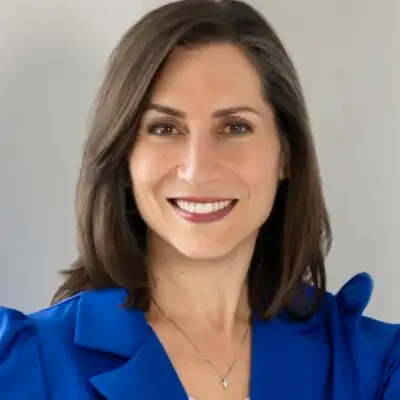
Today we have a special guest by the name of Laura Sicola. Dr. Laura is a leading communication expert, executive coach, and author of Speaking to Influence with a PhD in Educational Linguistics and a viral TEDx talk boasting over 7 million views. Laura has coached leaders at major companies such as Amazon, IBM and Comcast. Today, she shares how to master your leadership voice, win over key stakeholders, and turn your vision into an enduring legacy.
Laura, welcome to the boardroom.
Thank you so much for the invitation. I'm excited to be here with both of you.
So, Dr. Laura, I'm curious. You have a really impressive background, but could you talk a little bit more to us about your educational background and your upbringing? What you studied, what you decided to get your doctorate in, and what made you decide to pursue this particular path?
You know, sometimes your career finds you rather than you seeking it. And I remember when my older son was getting ready to go to college and trying to decide what to study, he said, did you always know that this is what you wanted to do? And I remember saying to him, I didn't even know what I do now as a thing until somebody offered to pay me to do it.
And sometimes that's how life works. But I'm an educator by background. I've taught elementary school. I've taught high school, I taught college, I now work with adults. I figure I got to keep working with older clients so that I stay looking younger. That's the only way to do it. But the my focus has always been about language and communication and how we teach and how we learn.
And what is it there about how to do that more effectively. And really, teaching per se is not different from speaking or from presenting or from training or from persuading or pitching or any of these other ideas. Right. It's all about how do you take the thing that makes such crystal clear sense in your brain and get it out of your mouth in a way that doesn't make you say, okay, that sounded better in my head, and also lands with the other person in a way that they can hear both your content and your intent accurately.
And that's the gap that trips everybody up all the time. So where my my undergraduate was an international relations and Japanese, Spanish was my second language, Japanese was my third. I did a master's degree in multicultural multilingual education. And then I did my PhD in education and linguistics, looking at how we learn and how we teach in order to make that learning more effective.
And that's where the work into leadership communication evolved.
As far as the language patterns and the vocal delivery, I was wondering how how do you teach executives and other students to to communicate where the words are not going in one ear and out the other?
You know, I wish the answer were as simple as the question, but the. So I'm going to start with the most annoying teacher answer ever, which is it depends. It depends on everything. And this is I think the biggest lesson is that when we are trying to convey something to another person, we are in a trying to give corrective feedback, or we're trying to get a board on board with our idea, or trying to let the organization know that there's some restructuring that necessarily needs to happen.
And here's what the rollout is going to look like. We can't just think to ourselves, well, here are the ten things that I need to tell them. And then go down the punch list, item by item and think that, well, as long as we are clear and accurate that our job is done, we have to start by backing up and looking at the context and asking ourselves a bunch of questions about the other person, about how this might sit with them, about what else is competing right now.
I mean, the difference for a lot of people, even insomuch as are you talking to them at 9 a.m. or at 4 p.m. by 4 p.m. most people are spent they've been in nine meetings already. They're tired. They just want a cup of coffee or to go home, whichever. Or to chance to finish up their own stuff. What's the nature of the the?
Is this a topic that should that might bring them concern? Is it concern about their timeline for another project? Are their concern about the stability of their job? There's so many things to consider before we determine how to frame and how to deliver these contexts. If we just go in there with a punch list, like we're talking to ChatGPT or Claude.
Yeah. Most people are not quite as objective or sycophantic as the AI bots are nowadays.
I'm so curious, are you finding that social media, and just the internet in general, is impacting the way that people speak and communicate? I know that I was having a conversation with a friend of mine who is a millennial, and she was venturing out into the dating world, and she was engaging with a man who was Gen Z.
And the way that I, I feel like millennials and Gen Z communicate is vastly different. Right. I, I feel like millennials are probably the last generation that didn't have social media throughout their upbringing, and it seems like I don't interact with a lot of these, but it seems like just the way that they speak is different and the way that they communicate, and that I hear even dating and engaging with people making friends is more difficult because everything is online now.
Are you finding that holds true in your work? I know you mostly work with adults, but are you seeing that maybe even with your kids, or with the generational differences in how people communicate?
There are always generational differences. The the boomers complained about the Xers. The Xers complained about the millennials. The millennials are now complaining about the Gen Z's. So that's a tale is old is time. It's just a question of what's the difference? Is it a matter of level of formality? I'm shocked that my younger son now is still in elementary school.
I'm amazed that how that how many kids in the neighborhood, just by default, call their friends parents by their first names, like there's a bunch of seven year olds that in the neighborhood. And everybody, the five year olds, they seem, they say, hi, Laura. I'm thinking my father would have killed me if I went around to his friends, to my friend's parents, and called them Tracy and Joe and whoever.
Oh my gosh. So it's like, I don't need them to call me Doctor Sokolow necessarily, but just something. And nobody corrects them. Nobody. So am I that much of a dinosaur relic? Whatever that I feel like I should be addressed by my last name as Mrs. or doctor or whatever. Okay. But so yes, every generation is going to be different.
For some it's a matter of what's your preferred mode of communication. Is it two thumbs through a text message? Is it a slack? Do you need to have complete sentences, grammar and spelling? Or can you say, are you okay with four letters as opposed to four words? Should there big capital or appear? Everybody and people take it personally.
This is disrespectful. This is unprofessional. This shows evidence of what we all. And that's the biggest part to your question originally, Dr. Eli, about the how do we make sure that they that things land the right way. This is part of the context. We need to say, well, what might they assume or what might they misinterpret. Because we all have filters.
And the problem, of course, is that we can't predict what filters are going to be the biggest tripwires for, for the conversation that we're about to have. The more we know about a person or an audience, the better we can then prepare around it. But something can always get tripped up. At which point a much bigger question is how do you handle it when something makes them, makes you go, okay.
How did you get that? From what I said, and where do you go from there?
I'm curious on that note about your TEDx talk. And, you know, it's been viewed millions of times. I'm very interested in what you think about your talk really resonated with audiences because clearly, you know, you have your doctorate in educational linguistics, and so you know how to get a message out in a way that clearly it will resonate with a very wide audience.
So what do you think it was about your Ted talk that really resonated with audiences, both in person and online?
I think is a number of things. Number one, the title itself says it all. Do you want to sound like a leader? And people are going, yes. And most people out there aspire to greater than what they currently have, and that usually has something to do with a leadership role, capacity or otherwise. So they're going, well, how do I do it?
Because I can't just night myself as whatever the next rule is, I have to prove myself to the powers that be who can then be Stoa this new role title raise hopefully on me to go along with it. And so how do I sound like a leader to them in a way that they can recognize? So just getting people to to check in and say, let's find out.
Is there an is there actually an answer to this question? And that's what people, I think are hungry for. And then of course, tactical and gives people lots of very specific steps to follow. It's not just theoretical and philosophical, which is what's most important.
Speaking of application, I was wondering, you know, you talked about the three keys, right? The three keys of command connect and close. I was wondering, why is it essential for leaders or aspiring leaders to have these type of skill sets already? Three C's or framework when they're communicating and when they are trying to convey some form of information from one colleague to the next.
The three sees are the foundation of everything that I train, coach, teach, speak about because it is about do you get to? Yes. Do you have the influence you want? Because we all would love to just be able to dump what we want to say onto somebody else. Have them understand it as intended, take it as gospel truth, not challenge your question.
Just accept it and do what we tell them. And if I could make that happen that easily, I'd be putting a lot more zeros on the end of my invoices that I send out. But, you know, as I tell my clients all the time, see this? It's a pen, not a wand. So we got a little bit of work to do.
And that work is saying, okay, what does it take? So the three keys are the key frameworks you need to keep in mind to give you the greatest possibility of being understood and having things land the way you want them. So real brief. Let's break them down. The first C is command the room. You want to be a leader.
When you show up, you need people to notice that you're there. This is not a attention hungry, needy look at me, look at me, look at me. But when you talk, is anybody aware that something's happening? What is it? And it can be even before you open your mouth. What is it about your presence that just makes people sit up and take notice?
You can be quiet. You can be an introvert and still command the room. They are not mutually exclusive by any stretch of the imagination. It shows that you carry yourself well, that you respect yourself by the way that you just show up. The second one is connect with the audience. You may be coming from the most diametrically opposed positions on a particular issue different worldviews, different experiences.
But on some level, on some point, you're going to find a way to say here, if nothing else, you understand me and I understand you, and this is how we're going to move forward together. And then closing the deal is not just a signing on the dotted line, transactional kind of peace. I mean, if you're in sales, eventually you want to get to one of those.
But even for my work, there's times when I may be talking with a prospective client, a company, and it could take 12 months or longer worth of negotiations before we actually sign a contract. So the closing the deal really means moving the needle forward, getting to yes, one agreement at a time, one understanding at a time, one notch at a time, so that that getting answers and agreements moving forward in progress together those.
So if you understand how those three pieces work together then you go, oh all right. Philosophically big picture I see maybe what I've been kind of ignoring for a very long time and where I need to start being more intentional in my communication. Now let's look at the tactics. Now let's look at the skills involved to be able to actually achieve those three things.
And I'm so curious, Dr. Laura, about micro habits and things that people can do in their everyday to speak in ways that are more influential. I know earlier in the conversation you mentioned the timing of when you talk to somebody is really important, but what are some other sort of like micro behaviors or habits that the listeners can adopt to make sure that they're speaking in a way that it maybe resonates or lands well with the person or the people that they're talking to.
I'm going to answer this question backwards. First, I'm going to talk about the how and then the what. So how do you identify what micro details you should work on? Because it may be different for each person. And the best thing I can tell you is to take your phone and just put on your, your camera, your video camera, prop it up against your screen and on your next zoom or teams or meet call, just video record yourself for five minutes.
When you're giving an update, you can do the whole thing. Great. If you happen to be recording the zoom or the teams meeting in its entirety, great. Go back to see where your elements were. Trust me, you watch that video, you watch two minutes of that video. You will not need me to answer this question for you because the video camera doesn't lie.
It's not tactful, but it doesn't lie. And what most people will see are things like, oh my gosh, I rambled for five minutes. I repeated myself four times. I never took a breath and it was one long continuous run on sentence. Okay, you don't need feedback from me. Those are great things to work on. Maybe you realized that you knew you had to talk about something kind of heavy, and you telegraphed your nerves the entire time.
You your eyebrows are up and you're kind of looking around and you were kind of stammering through it. All right, there's three more things that you need to just get a grip on its. And this is important because people get nervous like, well. Am I acting? And if I'm acting am I? And then we go down that whole rabbit hole and there's a time and a place for everything.
What does it mean to be authentic? Look, if I'm nervous, if I'm intimidated by the people I'm talking to, is it inauthentic if I don't say to them, hi, I'm Laura, nice to meet you. And I just want you to know I'm really intimidated by you right now. That'd be the dumbest way to shoot myself in the foot verbally, you know?
So it's not inauthentic. It's judicious as far as what you need to know, what you don't need to know, and whether I'm going to explicitly tell you or accidentally reveal it. So being mindful of where are you conveying the the tone, the mood, the confidence, their qualities that you want them to see and want them to hear in spite of what you say.
All of these things are things to pick up on, and I cannot recommend any tool more than the video camera doesn't taste good, but it helps.
It's interesting that you talked about what versus how. So my question is to you is which is much more impactful, which is much more important or holds more weight? Is it what you say or how you say it?
I love this question because it is a false choice, and it is a false binary that we impose on ourselves. It is. The most important part is how well we synchronize those two. When what you say and how you say it align when they're congruent. That's where we exude credibility. And that's at the cornerstone of leadership. That's the foundational concept in my Ted talk that you asked about earlier.
And when we dismiss it with tropes and truisms that we hear bandied all about like, well, it's not what you say, that's how you say it that matters. Well, in that moment it might have been because if you say, you know what's wrong and I say nothing's wrong, I'm fine.
Okay. Yeah, I'm thinking not I heard what you said. Clearly it is in that case, how you said it. That made me clear that the true content, the true meaning, was not explicitly stated. I needed to read into that. But at the same time, it can be the opposite to. If I want to give you feedback on a report that you gave me, and I can say to you, I mean, this is a piece of trash, and you've got to be an idiot to think I'm going to improve this, but, you know, no hard feelings.
You know, no disrespect. What? You know, it doesn't matter how nicely you said it. The foundation of your message. The what? You said you called me an idiot. You called my work trash. You can't say that nicely and have me, you know, not just make it sound like it's my fault for inferring something where you were just being whatever.
So it is absolutely both. The words are the foundation, like the foundation of your house, and the delivery is the walls and the ceiling. You need both. And you try to build the house just on straight marsh or straight land or dirt, whatever it is, you can put the walls there, but they're not going to stand very well or for very long.
And similarly, if you just build the foundation, okay, you got a hole in the ground with a cement foundation around it, but it's not a house you can live in. So you do need both.
I always marvel on the, you know, when it comes to numbers. So we as executives or as academics, we love numbers and being analytical and showing, you know, reports and whatnot and being you said, you know, as far as effective communication is the combination of what you say and how you say it. Do you think that, you know, some executives that do well, do they have that that skill set of understanding the numbers, but also, you know, basically telling the story behind it?
And or do you think that is something else, whether it's not storytelling or whether it's something else? Do you think that the combination of understanding the numbers and how to tell a story behind these numbers are important as well?
Absolutely. Because if you don't understand the numbers in the first place, you're in the wrong seat. So that goes without saying the ability to do the storytelling or to do other things around it. That's the translation of the numbers into a so what? That is digestible in a way that is appropriate per audience. So I do a lot of presenting, a lot of training for different teams, but I'm going to use different analogies when I'm explaining how certain constructs work cognitively and neurologically, chemically, etc. in the brain.
When I'm talking to a roomful of IT leaders versus a room full of finance leaders versus a nonprofit health, healthcare, small city office, entire team, versus guest lecturing at a undergraduate entrepreneurship class at a university. I can't just give the numbers. They'll glaze over, they'll tune out, and more likely, they'll just turn on their phones and start doing whatever they, you know, comes up on their home screen.
But so being able to come up with an with the story in a way that resonates with the interest and the technical expertise and the leadership tier level, that to understand how these concepts apply in their world, that's where it lands. Doesn't matter how much I know if all I can do is data dump content, the only thing they will leave having learned is, well, she sounds smart.
There's no value in that. You know, if I'm ego driven, okay, great. But no one's going to pay me to come back to that same message with a different spreadsheet or slideshow. How do you make them get it?
I'm curious, in situations when you have to communicate online or virtually, because I'm a person, anytime I have any sort of disagreement or misunderstanding, even when I'm communicating things to Doctor Eli, I'm a voice note person because I like to speak and convey my ideas, especially when I'm talking about something or explaining something. But I know that in an increasingly digital world, don't always get the chance to speak to people face to face.
Everyone's busy. Sometimes you have to communicate. Just be a text or email, and things often get lost in translation. Are there like best practices that you adopt when you have to communicate something in an email or in a way that's like non like nonverbal or not in person per se with someone to ensure like or do you adopt the same sort of strategies that you do when you're speaking with someone in person?
I'll start with that wonderfully annoying teacher's answer to start. Of course it depends. And.
Often if it's, for example, somebody you don't know well versus this is your team and you need to you've been working with the same half dozen people for the last year and a half. The the question becomes, do you notice some of the patterns where stuff tends to get misconstrued or where somebody just needs more context and somebody prefers to where it answers, or somebody takes things really personally and is always is the people pleaser who's always afraid of doing something wrong.
So recognizing a little bit about the individual differences of the person or groups that you're talking to and making sure that you support their needs to be able, and it's not like, oh, I have to do this for them. Well, the question is, do you want them to understand what you mean and not take it wrong? Then put the 30s or whatever it is into providing the extra context or organizing it a certain way, or whittling it down so that they can receive it.
Because there's a great expression if you don't have time to do it right, when will you have time to do it over? Because if you just blurt, whether it's undiplomatic or not having enough context, not whatever, there's going to be a problem. And either you're going to find out later, unfortunately, or they're going to ask you for the clarification.
You're going to have to do it anyway. And then that will have taken a lot more time than if you had just done it more effectively the first time. So it's that ounce of prevention versus the pound of cure in a communication space. And I think the other thing that matters is setting psychological safety for your team, just setting from the beginning.
And if you've been working together for a year and you never set this well, take a few minutes out of the next ten meeting or whatever it is, and have the conversation and say, I know that we communicate on slack, or I know that we tend to do this, or I prefer these kinds of things if there's ever something missing or if you feel like maybe you aren't reading it right, or you want to make sure you are that, feel free.
Please tell me. Please ask me, am I? It sounds like you are x Laura. Or it sounds did you mean this? Or was there a problem underlying this? Because I couldn't tell and I just want to be clear. So thank you for taking the time and effort to ensure that we are having good communication and not just stewing on it for the next four days in a panic that I was mad when I sent this to you when I wasn't, I just thought thumbed that one thing and I didn't mean to.
All caps that word. Let's let's be clear on it. So having setting the psychological safety to allow people to seek clarification, I think is really mission critical.
Yeah, I look at it in text. Sometimes when you take something, it may not sound as if someone is actually saying it. And it's different when you're actually, you know, talking and you're in person or you're having a phone call. Conversation is like, oh, you didn't really mean what you said. It was just interesting. So it's a matter of adapting your communication and you know how you do it effectively. I'm interested in terms of when it comes to trust, building trust, whether it's a new employee, whether it's a a new contract, a new you know, or whether it's someone who's seeking investment, investment from venture capitalists or is wondering what are the secret in terms of building a winning elevator pitch or an investor investment pitch from someone who may not know? Or for an investor who may not know the person who is trying to pitch to them.
There's a big challenge that I find with founders, and I do a lot of pitch coaching for different organizations. I just finished a webinar doing some pitch coaching for one for a bunch of non-profits yesterday. As a matter of fact, they there's such a concern with making sure that the slides are clear and that there's almost always a time limit.
Either you have five minutes to pitch, 20 minutes to pitch, whatever your time that they're trying to make sure that they smash in all the words and that they memorize the script. And while that serves a functional purpose, they get stuck in connection with trying to remember the next word that they had predetermined. And so they're connecting with their slides.
They're not connecting with their audience. They don't speak from the heart. They sound like they memorized a website, home page or a brochure, as opposed to letting know that this is your passion. This is your baby. You've been eat, sleep, breathing this. It's blood, sweat and tears that goes into it all and helped me see why it's you.
Let me believe that you. Years ago I was in an early cohort with Dream Adventures. I was trying to build an app when the iPhone had just come out, etc. and we had some some of the VCs from first Round Capital come in and just sort of listen to all of our various. They came to our, our stations and asked about it, and I gave them a little blurb about what it was that I was trying to build.
And, you know, he nodded for a second and he goes, okay, I'm I'm inspired. Good luck. And I asked him later. I said, out of all things you could have said, you said you were inspired. That's different from it. Sounds cool. Or it's, you know, whatever else. What was it about what you heard that you found inspiring? And he said it wasn't what you said.
He said it was you. I believed you, and it just seemed like you were the right person to do this. And I don't know, I just believed in you. So the ability to connect with the person that goes back to that second C and the first one, for that matter, to command the room and connect with the audience.
We sat there on folding chairs in, you know, a giant unfinished factory kind of warehouse room. I'm t shirt and shorts. There was nothing executive about any of it, but it inspired a VC because he bought into me. And that's the key.
I was wondering, when it comes to the common pitfalls of, you know, when you try to build trust, what are some of the pitfalls that undermines a leader or a founder from being that expert or being that authority figure, or having confidence in what they're presenting? What are some of the, you know, common pitfalls? And sometimes they don't even realize that they're making that those mistakes.
But do you recognize or do you know, some of the common pitfalls that are some of the common disadvantages that some leaders who may be presenting face whenever there are, you know, they're presenting?
How much time do we have? Yeah, there are many things to look for, and some of the easy ones are being aware of your fillers as you're talking, whether it's memorized or otherwise. The ums you knows you let the likes do. You start every sentence with so and do you slide in the what I call educated fillers, which are polysyllabic words which that are equally useless, but we stick them in because they sound smarter.
So words like basically pretty much actually blah blah blah. There was I did some pitch coaching at universities, undergraduate business competition, and there was one young man. He was amazing. Tight, tight, tight, flawless on just about every level. Accepts in this one question at the end when it was during the Q&A portion. And so they finished the whole thing and I was giving some feedback, some coaching feedback.
And I said this one question that he asked this was, that was the one place you weren't terribly sure, wasn't it? You were confident in everything else. And he kind of, you know, hedged a little bit and agreed that it was not the most comfortable question for him to answer. And I said, do you have a tell? And that tell was that he prefaced it with, well, basically everything else he said was laser focus.
It's this here's the number, here's the intention, here's the plan. Well, basically fudge. So he telegraphed it. And somebody else in a similar situation had on the other end of the spectrum, it was a body language tell that she had she was great, smooth, smart, really well versed. But during the Q&A, I said she I said to her, do you know what your tell was?
And she guessed a bunch of things. Did I say, did I do this? I said, no, it's your left thumb. And she looked at me kind of funny. And this was a few years ago when everything wasn't rechargeable, but she had the clicker in her hand for the slides, and it had a battery compartment in the back, and those battery compartments kind of slide off.
And she had it in. Her arms were folded, but it was underneath and I could still see her thumb and I could hear it because she was playing with the cover. Click, click, click, click. Just sliding it off, sliding it back on, clicking it into place. That was her version of like tapping her foot or playing with your hair or playing with whatever it is.
That was the Oshu indicator. Only when she was uncomfortable. Suddenly the battery compartments cover went into overdrive, so we had to be mindful of those little tells. If you were at a poker table, that's when somebody else would know to double down.
And I know people say specifically, like when you're a speaker, imagine everybody in the crowd naked. That never works for me. Not nowadays. Yeah. It's just like, I don't know if that really works, but what really helped me when you said that I automatically thought of Toastmasters after I got my PhD, I just felt like I wanted to a challenge.
And so I joined my local Toastmasters group, and that's where I learned about filler words. And I thought I was a good speaker, and somebody was evaluating a speech that I gave. And one thing that I noticed is my fellow word is so. So I don't say, and a lot, but I'm like, so. And I noticed that with my teaching and that was great to pick up on.
But one thing that I've done all my life that I know that I do, but I wasn't aware, is that when I speak to somebody, especially when I'm in like a heated conversation, I tend to look up. And it was something I wasn't like, cognizant of. And somebody said it in a very simple way when they were giving me feedback during Toastmasters and I was like, oh my gosh, like, I, I had recorded myself, but I never really like I don't know why it didn't click until that person said, if you want the audience to really be pulled in by what you're saying, you have to look people in the eye.
When you're in the room with them. They want that I contact.
That was, like, wow. So like when you said filler words, I think that's a big one because now I'm so hyper aware of them because I was in Toastmasters. So I do think that when I'm listening to a speaker and they do say Arms and ocelot, I'm more I'm like, in my mind, I'm more cognizant of that. And I do think it takes away.
But I wonder for somebody who's not really maybe the average person who's not really aware of of that, if it's something that they also pay attention to. Do you work with, or is Toastmasters something that you recommend for people who are like, I want to get better at speaking or speaking for influence. If somebody came to you and said, you know, Doctor Laura, you work, you've worked with all these companies and you have such an extensive background, I can't necessarily afford to hire you as a speaking coach.
What are there other resources you recommend to people who maybe I don't want to say can afford you, but who who want that extra help?
Sure. The Toastmasters is a great organization. There's they've got a really solid curriculum, lots of different topics and skills that they help you build. And for clients who are working with me, where the public speaking component is, is an area of interest for them, I will often encourage them to do it in addition to coaching, because if nothing else, Toastmasters gives you something that I can't, which is a group to present in front of.
That's not what I do. I'm a single person and we have other stuff to work on, but just the comfort with talking in front of 10 or 20 or however many people. That's something that you have to practice in front of more than one person. So it's great to have that space and to be able to get the feedback they of course will use.
And I just said, I don't think it's terrible to use it. It's a question of how. And this is where there's letter of the law and there's spirit of the law and Toastmasters. You're always going to have the, counter in the back, who's going to literally sit there and tally every filler that you use useful. That being said, I did work with somebody who she was in human resources, and she had a reputation of being a little cold and unapproachable and which of course, is kind of counter to what human resources is supposed to be.
And what part of it was that she had gone through Toastmasters. She was a great public speaker, and she was meticulous in her articulation. She never said, but because she was so concerned about presenting herself perfectly. Alla to be a 100% A+ star per Toastmasters, she came across as very stiff and very. I don't care if you can recite the handbook, chapter six, verse three to me perfectly without saying, I'm worried about whether or not you're going to help me with this sexual harassment issue.
You know, there's so what matters. And are you applying the tools correctly? Because any tool by itself is neutral. It can be applied well, effectively, for good or otherwise. I mean, the internet, social media, AI can be used for good, and we know there are bad actors out there as well. The idea of eliminating and fully eradicating all fillers from your speech, is it inherently necessary all the time?
No letting it slide here and there. It's human. Okay, I have not sanitized them from my conversation here. Now, I don't know, maybe your editors for this podcast are going oh shoot okay. No self go back, put those back in. We already edited the last six of them but it happens. But the time and the place and to what extent are those momentary conversational inflections versus are they becoming so common that they're distracting?
That's the point that we need to be mindful of. What? There was another client that I worked with where I was. He was pretty high up in a local company, and I was specifically brought in to work with him on reducing the nose. That was his filler of choice. And it got to the point where when he was in the leadership meetings, the rest of the people on the team had taken bets beforehand about like over under bets.
How many do you think he's going to say this time? And they just sit there and tally? They were right there as if in Toastmasters, and they'd see who was closest. And I think the worst example that they had gave was he had spoken for a little under five minutes and there were around it was a little five minute stretch or so, and he had 47 tokens of, you know, now do the math.
It rounds out to about one every 6 to 7 seconds.
Crazy. So at that point, we've gone way past the minor distraction category. This is debilitating. This is we can't send you out to talk to investors and to be on stages to represent us, because you don't represent us with the kind of executive presence, the kind of integrity, the kind of expertise and professionalism that needs to reflect our brand.
So until you get this under your under control, sorry, we're going to find somebody else.
I'm curious in your work whether you find that there are cultural differences in speaking to influence. Right. Do you find that in some cultures, the way that you can influence a person or an audience differs based on other cultures? And I ask this question because I have a friend who works in finance, and he said he had an employee who was from China.
And one of the things that they were trying to work on is her communication. Because in her culture, I guess she was taught to be more, less communicative. Yeah, and more humble. And she doesn't talk about her accomplishments or brag about them. And it goes counter to American culture and also like just their industry. So do you find that there are cultural differences and how do you navigate that or do you.
Yeah, yeah. How do you navigate that?
There are absolutely cultural differences. And I want to to put a little asterisk caveat that when we look at culture in this big macro sense, we're talking about broad generalizations, not stereotypes, because most people out there, you either of you have siblings like full genetic siblings. You ever feel like you are so different from me? I don't understand how we came out of the same womb.
100% right.
So understanding that you can have the same shared gene pool and still be that different, despite the fact that quote unquote, you come from the same culture and do people can come from very different cultures and still be very similar. And so all of that is a preface that, yes, we'll address culture now, but we are not stereotyping.
There are still individual differences on every level. So but yes, there are I would say probably half of the clients that I've worked with over the last 20 years have been from other countries, not native English speakers. So there's always those kinds of influences. And even if you're born here, are you born in the South versus in New York?
Are you born seventh out of eight kids or are you an only child? Are you? Were you raised by a single mother, a single father, a very patriarchal, traditional, hierarchical kind of family. You don't speak, talk back to somebody you speak when spoken to. Children should be seen and not heard. How were you raised? All of that comes in and creates filters and beliefs, some explicit and some implicit.
But the concept of humility and respect are absolutely two of the most commonly referenced points of challenge for people coming into a typical American corporate culture. Because here in the US, if you want to get ahead, you're expected to advocate for yourself. You're supposed to demonstrate executive presence, which means interrupting and which means contradicting and debating and participating proactively in discussion.
You want something, you want to promotion. You have to throw your hat in the ring. If you don't tell me you want it. Why would I assume that you do? And but that goes counter. I work with a lot of clients from China. I lived in Japan for a number of years. You know, there's many cultures, and not just from East Asia where the belief is you keep your head down, you do your work.
And it's my job as your boss to pay attention and recognize when I think you're ready. And then I will tap you on the shoulder and say, I've chosen you, you're going to be promoted to this, and you will trust that I'll do my job and recognize when you've earned it and give it to you fairly. And that's not how it works here.
So helping them to recognize that it's not about inauthenticity, go back to that construct. It's not about sacrificing who you are, your your home identity to take on some new identity in the workplace. It's about recognizing that, yes, we do need to show up differently in different contexts, and we will learn to communicate differently. But we have to reopen allies.
We have to redefine what humility looks like, what confidence looks like. Does humility look to the point where I'm scared to talk to anybody? Well, if you aren't, you don't want to participate in meetings. Is that because you're being humble? Or just because you're really shy, or because you have major anxiety about people looking at you? How do I know how to read your silence?
You have to help me understand what you want, and it's a gray scale so you can be confident in what you've done without saying, I'm the best. I'm right. Don't contradict me me me me me me. It's not binary, humble or arrogant bragging, which is words they need to they often use. So learning to recognize in this context.
How can I be confidently humble, appropriately humble, while still advocating for myself, while still defending myself, while still sharing my ideas? So it's a lot of it is learning to redefine these concepts in a way that fuzes the goodness of the home values that your family and culture and environment raised you with, and learning how to flex accordingly for this very different environment.
And it's not just when you go from home culture to work again. I was born and raised in new Jersey, went and lived in Japan for a number of years. There was stuff I was born and raised with as values that did not fly there, and I did have to learn to adjust so as not to be completely misinterpreted in a way that would get me ostracized.
Did it feel weird in the beginning? Sort of. Because I'm like, what do you mean, that's a problem? But you learn to adapt. It was not about being insincere or about being having to to sacrifice identity. It's expanding my identity to also include these other behaviors. So, you know, the term that everybody is familiar with is code switching.
And there's healthy and unhealthy. We're not talking about the unhealthy forced covering kinds of things. That's a whole separate conversation. But when we're looking at intercultural communications, if you don't code switch from English to Mandarin on the greatest macro level, you're in trouble. And learning how to do the smaller details of what this humble look like here versus here.
Okay, that's part of your skill set and you need to learn to apply it masterfully.
I'm curious also about the gender differences, because here are all these things about how women communicate. One thing I saw is, like women have a tendency to apologize right in an email, and I do this. So I was aware of like sorry for the delay rather than just getting straight to the point. And so do you work with a lot of women clients?
And do you notice that there are traits or behaviors that you see consistently with women versus men as far as the way that they speak or the way that they speak to try to influence?
Yes. And here's with an asterisk next to it, just like more talking about different cultures, looking at genders. As to giant monolithic groups, we're also talking about big picture patterns, not so much individual differences here. And it's funny, I remember back in the 90s when Doctor John Gray's book Mars and Venus Men from Mars, Women Are from Venus, first came out.
You know, I was right out of college. I'm dating myself now, but I remember reading it and thinking to myself, oh my gosh, I'm such a guy. Like, it was so weird to read all that because I felt like 90% of it did not apply to me. That was not how my brain worked. So with that understanding, the the biggest discrepancies in the clients that I've been working with from, from a gender base is women are often penalized for stuff that is dismissed for men.
The I've never heard a man say I have, and I've built a reputation of being a little too aggressive or a little too intimidating. I mean, occasionally there are guys who will be sent to work with me or will choose because, yeah, they have a diplomacy problem, like they leave bodies in the wake in conversation, but it's not quite the same thing.
It's like women are told to soften the edges. They don't know what it means or how to do it. But something about the and they say, well, I tried being nice and that didn't work, so what am I supposed to do? And this is where we get stuck in the binary. The sense of I could be nice or I can be effective, and we have to start looking at all the little details.
What is it about your the way that strength, the way that confidence is coming across, that is having that bitter sour edge to it, that is making it hard for people to receive it as you intended, because they're all say, I'm just trying to be clear, it's not personal. It's just this. And then we'll do a little video like we talked about before, and they'll realize I had one eyebrow cocked the entire time, or they thought they were just being clear, but their voice is flat the entire time, and they were talking way too fast because they were under pressure.
And it's like, okay, so and then they'll hear it in themselves. So it's not about this. They just haven't identified. But those are the kinds. That's the feedback that women will get more so than men. And yes, women absolutely do apologize more than men. There's tons of research that shows that both orally and and other and in writing correspondence.
So and it goes both ways where there are certain things where you should apologize and so should men and men needs to take a little bit more of a cue from women there and times where, no, there's no need to preface with an apology. When you're sharing an idea, don't diminish your idea before you even give it to them until their own conclusion.
And but that also is cultural and contextual. And are you with a group where people tend to downplay their stuff, understanding that it's just being polite? Whereas if you're with a group where it's like, no, no, no, wait, wait wait, what about this? Okay, don't disclaim that. First, read the room and decide accordingly. Will your apology be taken literally or just as a politeness convention and appreciate it?
So recognizing those details matters. And but even things like imposter syndrome, women address imposter syndrome where they don't feel it more when we when we're talking one on one. I have plenty of male clients who have been newly promoted. It's their first time in the C-suite. It's their first time in this industry. And there's massive fear about, can I handle it?
Am I going to be viewed as you don't belong here or you're not ready, or you're a fraud, etc., the fear of public failure, but men haven't been socialized to discuss it. You go to any women's conference, there's going to be 12 speakers who are going to address imposter syndrome, if not in the title, in the description, and certainly in a bullet somewhere in the slides.
You will never see that in a coed conference on leadership, especially in a talk given by or run for men. But behind the scenes they do talk about it. They often just don't know that that's got a label. So, you know, what are we allowed to talk about? What's what have they been socialized to believe is acceptable? And we all have to worry about our own gender challenges.
I have one final question for you. What is one unwritten rule or one advice that you would like to give a future aspiring leader that needs to as far as executive communication or otherwise, what is one unwritten rule that you have for them to master today?
I think that it needs to be. When you're talking, you need to speak with people, not at people. It's about including them, making it a dialog, not just telling whatever you're thinking, unvarnished. Well, I got to be me. This is my authentic self. Here's what I'm thinking. Blurt, but not hiding either. Make it a conversation. Seek to understand their perspective on something as context to help you share yours better.
So listen for real, not just listening to respond. Make it a conversation. Speak with people, not at people.
Laura, it was a pleasure having you on board in the boardroom. This was a delightful conversation. I really enjoyed this one, and I hope the listeners can take a few cues or a few advice that you have provided and bestowed upon us.
Thank you so much, Dr. Eli, Dr. Janice, this is a great conversation. Loved every minute of it.
Thank you so much, stock. We thank you for being here with us.
Thank you so much. This is the boardroom and we're sending out right now.
[Theme Music]
of a scholar and a business minded soul. We at the academic forum. Yeah, we keeping it 100. If you're looking for the truth. Well, you finally found it. Take a seat at the head. Let the dialog flow. It's a masterclass. Five. If you did it now you know.